Electric vehicles have moved from a novelty to a common sight on Hampshire’s roads, and with that shift comes a very practical question for new and prospective owners: where and how do you charge at home? Relying on public chargers is fine in a pinch, but it is slower, more expensive and far less convenient than plugging in on your own driveway overnight. A dedicated home EV charger is the answer, and having one properly installed is one of the best upgrades an EV owner can make. As qualified electricians based in Hamble serving Southampton and the wider South Coast, we install these every week, and this guide walks you through what you need to know.
Why A Dedicated Home Charger Beats A Three-Pin Plug
It is technically possible to charge an electric car from a standard three-pin socket, and many cars come with a cable to do exactly that. In practice, though, it is a poor long-term solution. A standard socket delivers only a trickle of charge, often taking well over a day to fill a larger battery, and domestic sockets and wiring were never designed for the sustained high load that charging a car demands.
A dedicated home EV charger, by contrast, is a purpose-built unit wired directly into your home’s electrical supply on its own protected circuit. It charges your car several times faster, is far safer for continuous use, and includes built-in protections that a normal socket simply does not have. For anyone charging regularly, it quickly pays for itself in convenience alone.
Understanding Charger Speeds And Types
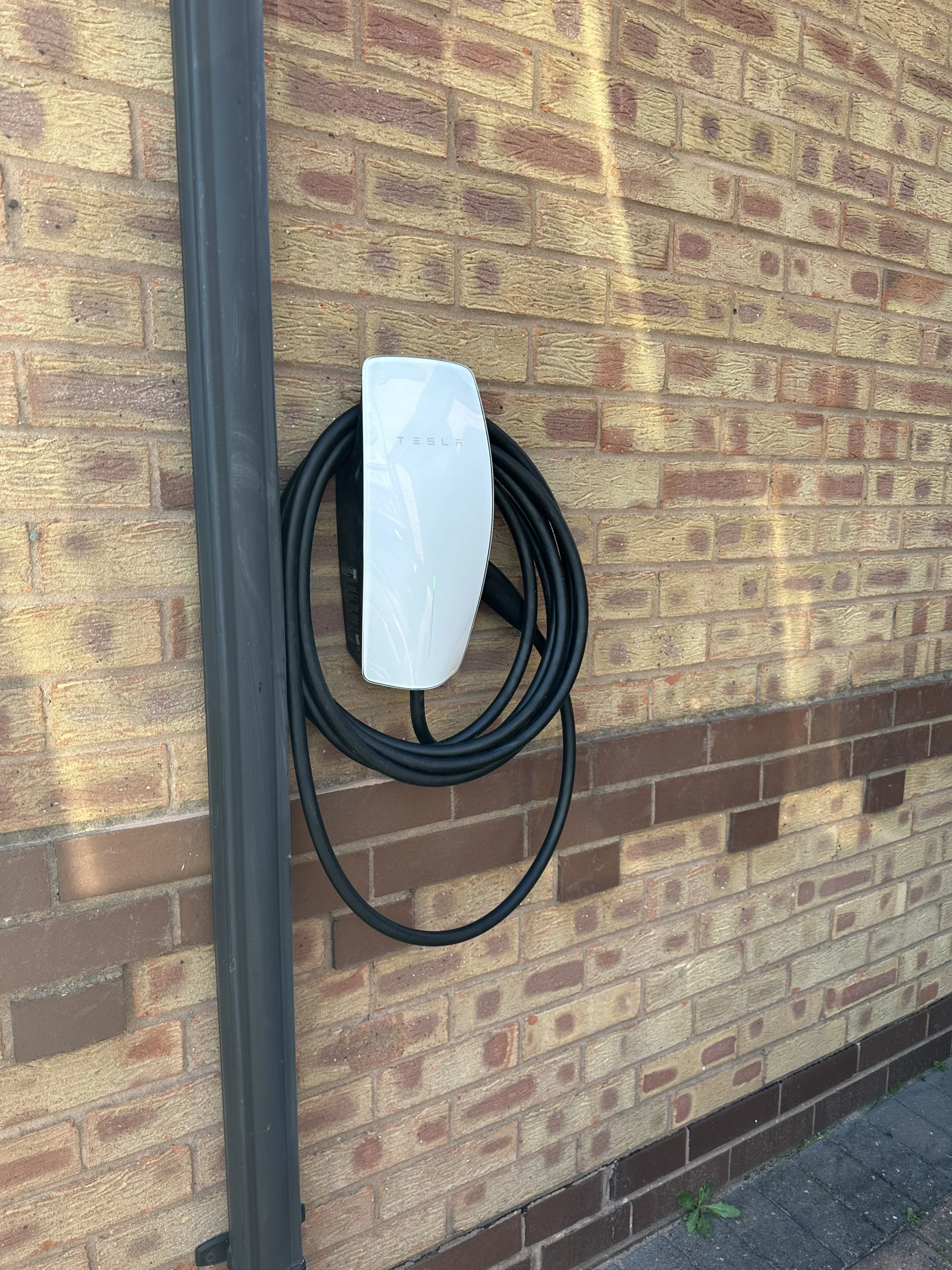
Home chargers are not all the same, and choosing the right one depends on your car, your home’s electrical supply and how you drive. The main things to weigh up are:
- Charging speed: most home chargers are rated at 7kW, which suits the vast majority of households and typically charges a car fully overnight.
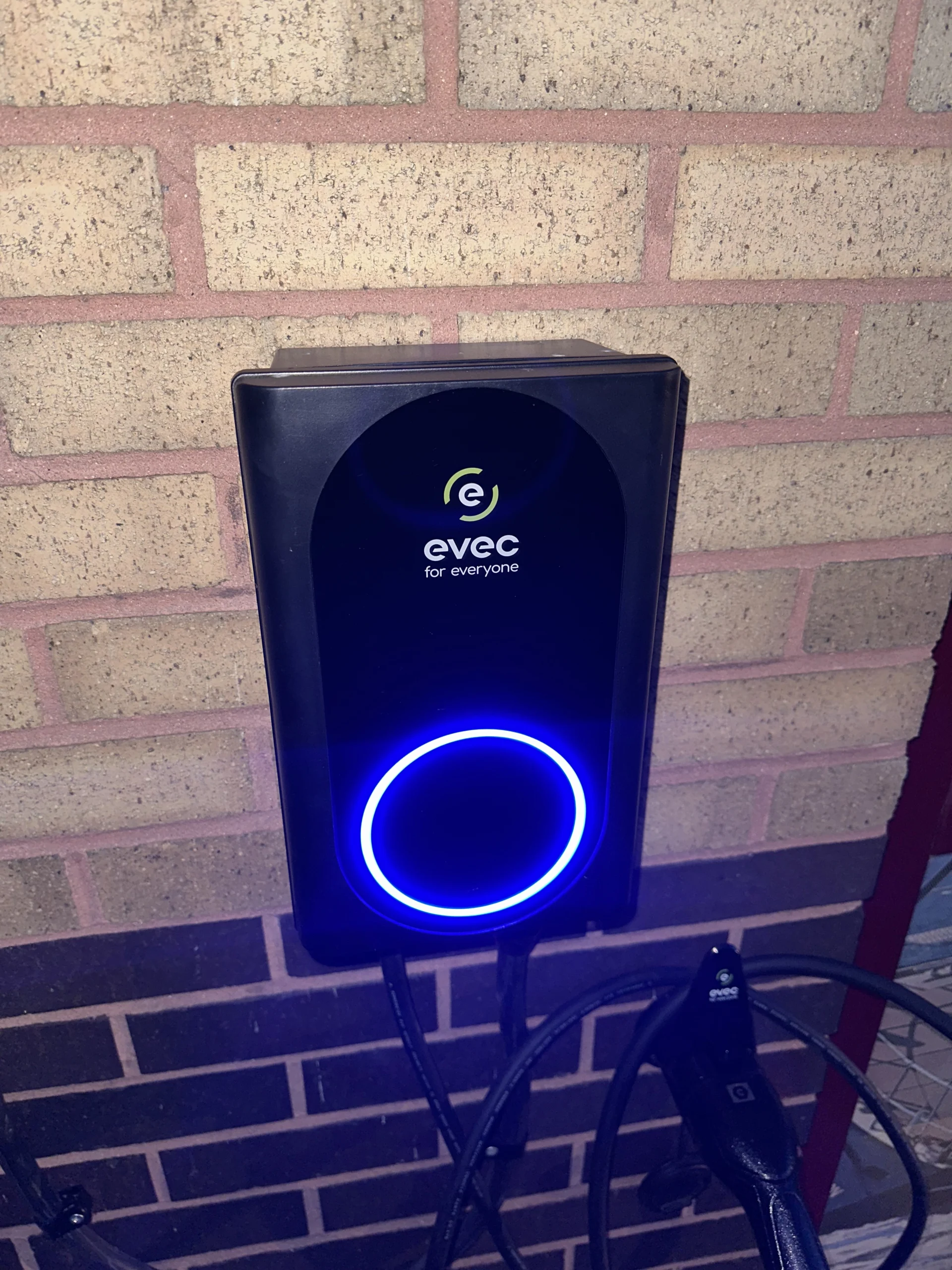
- Tethered vs untethered: a tethered unit has a fixed, attached cable for convenience, while an untethered unit has a socket you plug your own cable into, offering more flexibility.
- Smart features: most modern chargers are “smart”, letting you schedule charging for cheaper overnight rates, monitor usage through an app, and even balance load with your home’s other demands.
- Solar compatibility: some chargers can be set to draw from your solar panels, charging your car with your own generated electricity where possible.
There is rarely a single right answer, only the best fit for your situation. A quick conversation with a qualified installer will point you to a unit that suits your car and your home rather than leaving you to guess from a spec sheet.
What’s Involved In A Home EV Charger Installation
A professional installation is more than simply bolting a box to the wall. Before anything is fitted, a qualified electrician will assess your home’s electrical supply, in particular your fuse board and main incoming supply, to confirm it can safely support the additional load. This step matters, because adding a high-demand circuit to an unsuitable board is exactly the kind of shortcut that causes problems later.
Once the supply is confirmed suitable, the charger is mounted in a sensible location near where you park, wired back to the consumer unit on its own dedicated, protected circuit, and thoroughly tested before being handed over. In some cases the fuse board may need upgrading or additional protection fitting first, which a good electrician will flag and explain up front rather than spring on you. The whole job is usually completed within a few hours for a straightforward installation.
Grants, Costs And Things To Consider
Cost is understandably a key factor, and it is worth knowing that government support exists for certain groups. While the original grant for homeowners with off-street parking has closed, schemes remain available for renters, flat owners and landlords installing chargepoints, so it is always worth checking your current eligibility before you commit. Beyond any grant, the main cost variables are the charger you choose and any work needed on your supply.
A few practical points are worth thinking through before installation day. Consider where you park and where the cable will need to reach, whether your electricity tariff offers cheaper overnight rates that a smart charger can take advantage of, and whether you have or plan to add solar panels the charger could draw from. Getting these decisions right at the outset means a tidier, more cost-effective installation and a charger that genuinely fits how you live.
Why Use A Qualified Electrician
Installing an EV charger is notifiable electrical work that must comply with the relevant wiring regulations, and it involves high loads on your home’s supply. This is emphatically not a DIY job. A poorly installed charger is a genuine safety risk and can invalidate warranties and insurance, quite apart from the frustration of a unit that does not work reliably.
Using fully qualified electricians ensures the work is done safely, tested correctly and certified as it should be, giving you both peace of mind and a charger you can trust for years. We say to customers regularly that with anything carrying this kind of electrical load, the right installation the first time is always cheaper than fixing a rushed one later.
Frequently Asked Questions About Home EV Chargers
How long does it take to install a home EV charger?
A straightforward installation is usually completed within a few hours. If your fuse board needs upgrading or extra protection fitting first, it may take a little longer, which we will always explain in advance.
Will my home’s electrical supply cope with a charger?
Most homes can support a 7kW charger, but it depends on your existing supply and consumer unit. A qualified electrician will assess this before installation and advise if any upgrade is needed.
Can I charge my EV using my solar panels?
Yes, with a compatible smart charger. Some units can prioritise charging from your solar generation, letting you run your car on your own electricity where possible and reducing your reliance on the grid.
Do I need planning permission for an EV charger?
In most domestic cases, no, as installations typically fall under permitted development. There can be exceptions for listed buildings or certain locations, so it is worth checking if your property is unusual.
Get Your Home EV Charger Installed By Premlex Electrical
A properly installed home EV charger transforms EV ownership, turning charging into something you simply do overnight without a second thought. The key is choosing the right unit for your home and having it installed safely and correctly by qualified professionals.
At Premlex Electrical, our fully qualified electricians install EV chargepoints for homeowners across Hamble, Southampton and the South Coast, and we can advise on the best solution for your car, your supply and even your solar setup. To arrange an assessment or ask any questions, call our team today on 02380 000 440 and get ready to charge with ease.